The practitioner
Ross Parkinson
A little mystery, a little mischief, and a lot of wisdom.
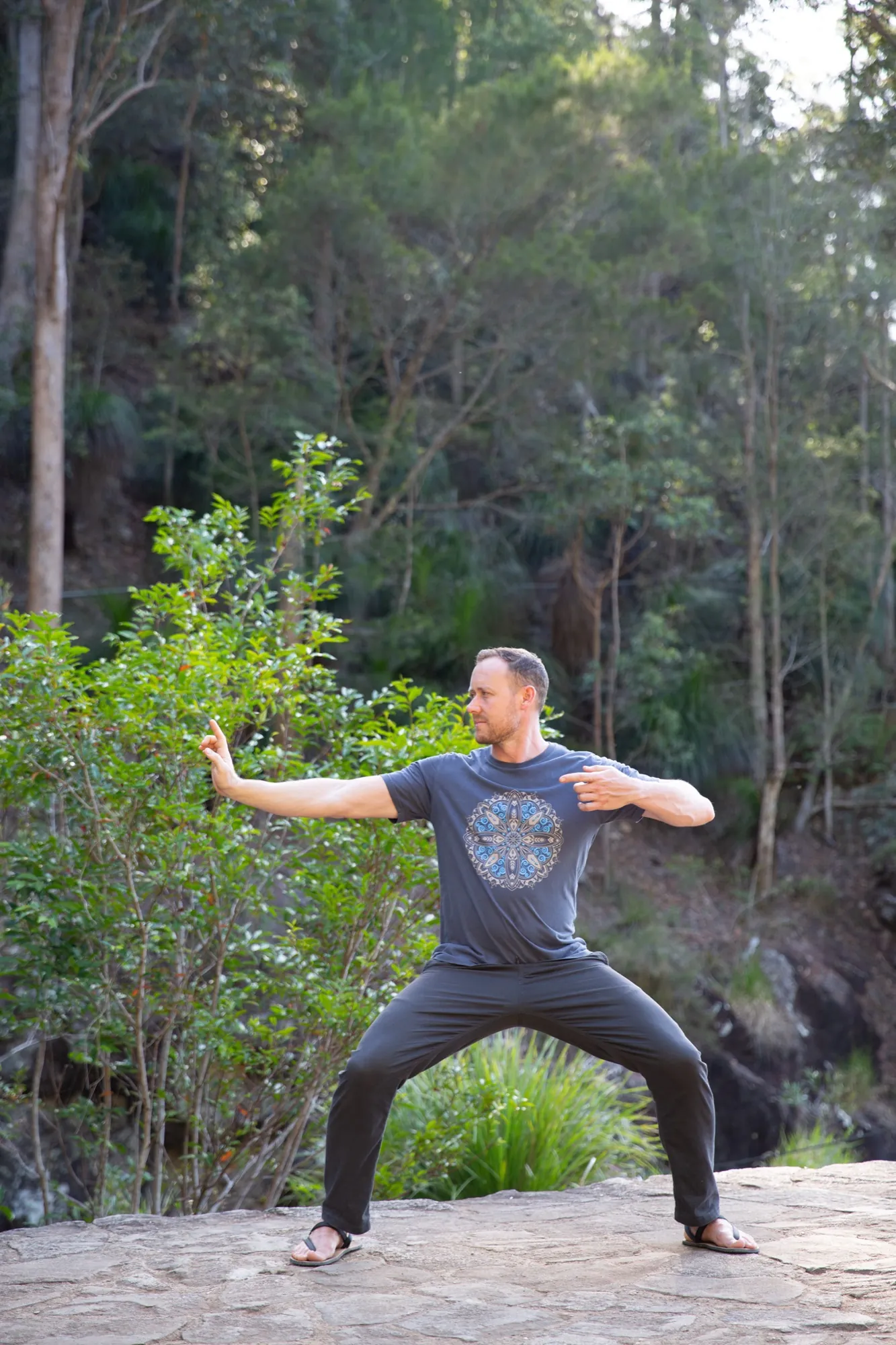
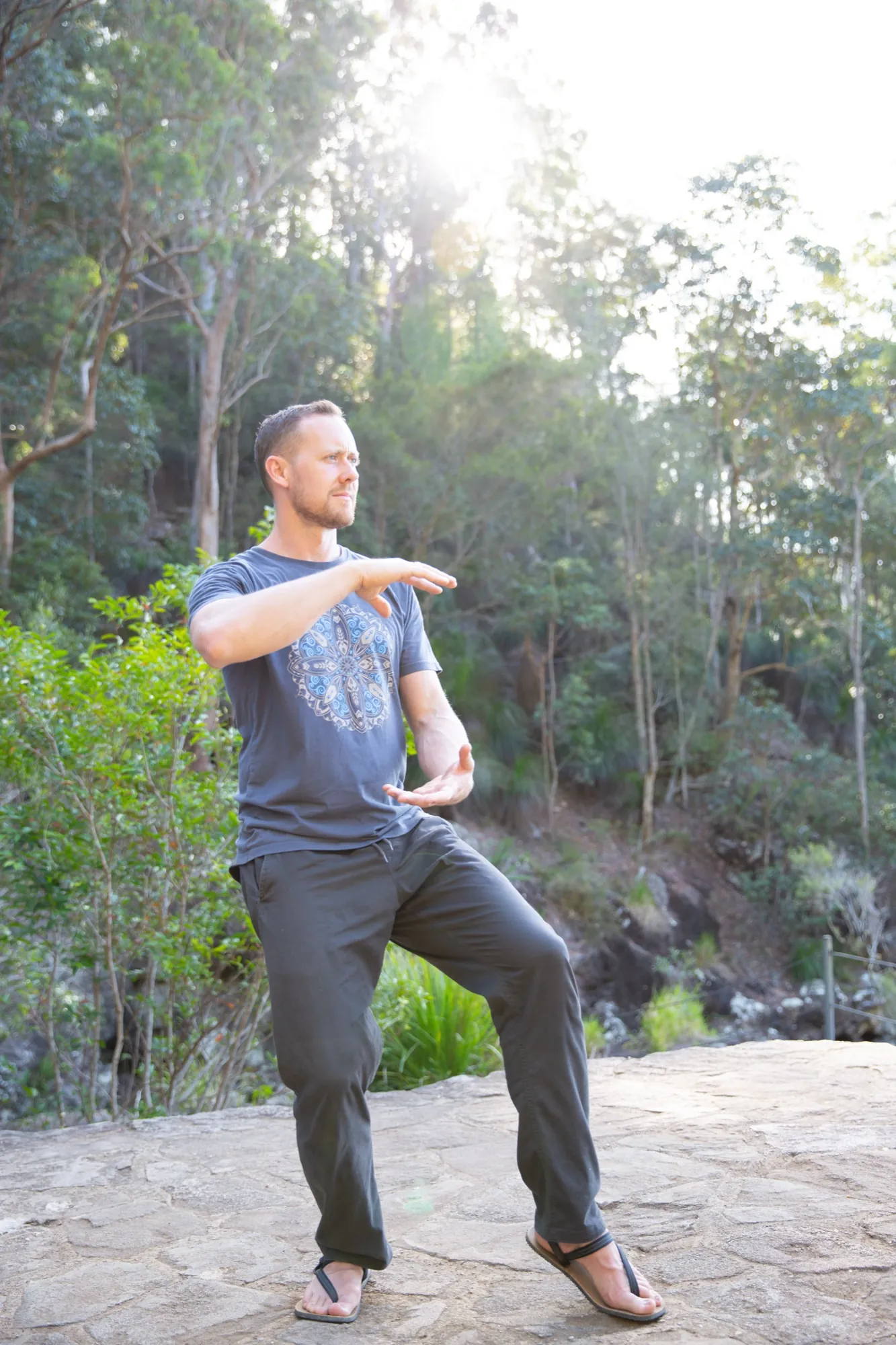
Ross has spent years studying how the body works — not just anatomically, but as a system of patterns: how tension accumulates, how pain refers from one place to another, how one restriction quietly feeds the next. Long before he worked in a treatment room, he was already paying attention to the body in other ways — through Qigong, through Kung Fu, through the kind of disciplined, repetitive practice that teaches you to feel things most people never notice.
That groundwork led him into formal clinical study. Ross holds a Bachelor of Health Science in Traditional Chinese Medicine, and trained in Classical Japanese Acupuncture in the lineage of Sensei Ikeda Masakazu — a tradition built on the idea that less force, applied with more attention, gets you further. He is not currently practising as an acupuncturist. What that training left him with is something that transfers directly into his manual therapy work: precision, a light and deliberate touch, and the habit of reading the body closely before and during every treatment.
"A little mystery, a little mischief, and a lot of wisdom."
The clinical training is only half the story. The other half is years spent in disciplined physical practice — the energy arts as a training method, not a belief system. That kind of practice builds a very practical skill: the ability to notice a shift in someone's breathing, the way a shoulder guards itself, the moment a body actually starts to let go. It's not something you learn from a textbook. It's something you build slowly, through your own body, before you can read anyone else's.
How Ross works
Ross doesn't work from a menu, and he doesn't apply templates. He reads what your body is presenting on the day and draws from his toolkit — dry needling, cupping, the hot roller, remedial massage, Acutonics sound therapy, infrared heat — based on what he actually finds. The work is continuous. He stays with you for the whole session, adjusting as your body responds, rather than setting something in motion and leaving the room.
That's the real difference clients notice. Not any single technique, but the quality of attention behind all of them — a practitioner who is calm, present, and genuinely paying attention from the first minute to the last.
Training & background
- Bachelor of Health Science in Traditional Chinese Medicine
- Training in Classical Japanese Acupuncture in the lineage of Sensei Ikeda Masakazu — noted here as background; Ross is not currently registered as an acupuncturist, and all services are delivered as manual therapy
- Years of dedicated practice in Qigong and Kung Fu
- Acutonics sound therapy — precision tuning-fork work applied to the body
Outside the treatment room, Ross has a long-running curiosity about ancient history and pattern — the kind of question that asks not just how something works, but why it was built the way it was. It's the same instinct that shows up in how he reads a body: less interested in the textbook answer, more interested in what's actually there if you look closely enough.
His clients feel safe with him. They open up. Their bodies respond. That connection is at the heart of everything he does.